TOKYO — An underground ice wall built around the crippled Fukushima Daiichi nuclear power plant has so far been unable to block the flow of groundwater entering buildings and mixing with contaminated water.
Article by Daisuke Abe
Tokyo Electric Power Co. Holdings, the owner of the plant and known as Tepco, plans to encircle four reactor buildings with a 1.5km barrier of frozen soil to prevent underground water from flowing under them and carrying radioactive water to the ocean. Work to freeze soil began six months ago and was partially completed in October. Further delays could affect the entire process of decommissioning the power plant.
Water water everywhere
The plant is located between mountains and the ocean. Underground water constantly flows from higher ground toward the sea, passing beneath the power plant along the way. This water is flowing into the basements of the buildings housing reactor Nos. 1 to 3, which were damaged in the earthquake, tsunami and subsequent meltdowns. It comes in contact with molten nuclear fuel and other materials, resulting in water contaminated with cesium, strontium and other radioactive substances, most of which can be filtered out, except for tritium.
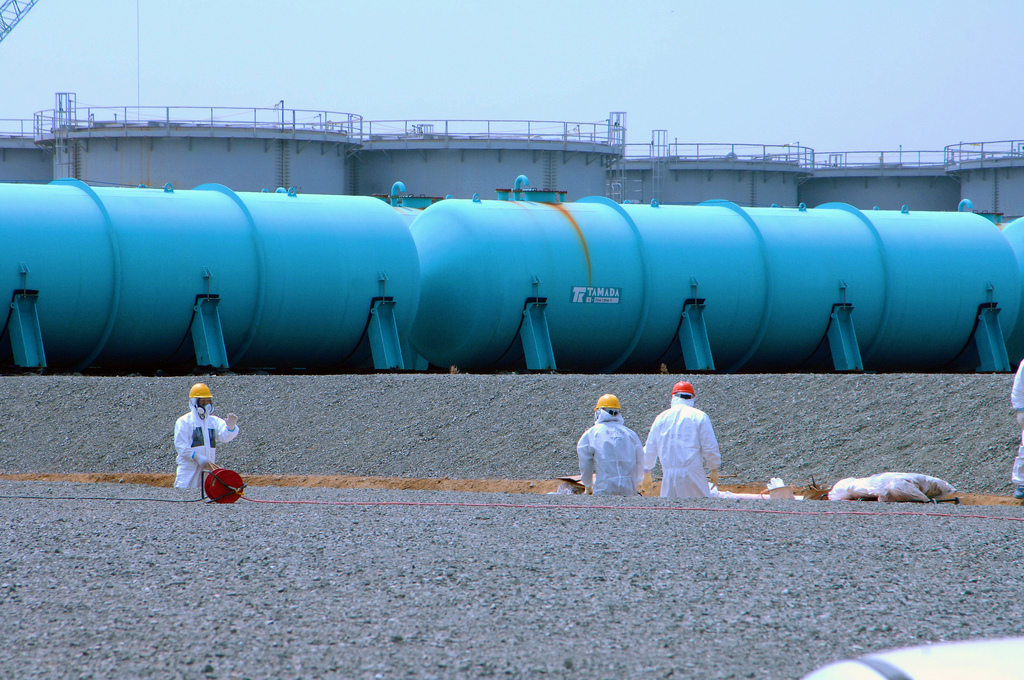
The tainted water is pumped out and stored in tanks on the plant’s premises. Nearly 1,000 tanks are full, and the storage system is reaching its capacity.
With 400 tons of newly contaminated water every day, a key task is addressing the twin problem of reducing the amount of water that is getting tainted and processing the water containing tritium.
The ice wall was built to block the flow of water seeping into the buildings and flowing through them. The wall consists of 1,568 30-meter long pipes, set in the ground at 1-meter intervals, that are filled with refrigerant and cooled to minus 30 C. Planners envisioned a 1-meter-thick wall of frozen soil circling the plant.
Tepco had planned to remove all the contaminated water from the reactor buildings by the end of 2020, but its plans are being thwarted by water continuing to flow into them.
No deep freeze