Study Finds Pesticide Residues in Infant Formula, Researchers Cite Health Risks
07/10/2026 / By Iva Greene
A systematic review of scientific literature published by researchers at Sapienza University of Rome has documented the presence of multiple pesticide residues in infant formula, raising concerns about short- and long-term health effects on infants. The analysis, published in July 2026 in Environmental Toxicology and Pharmacology, examined 26 studies conducted between 1975 and 2025 and found that 22 of them reported contamination.
According to the study authors, the contamination involves a variety of pesticide classes. “The contamination of infant formula does not concern a single class of substances, but manifests itself as a heterogeneous and simultaneous set of risks: pesticide residues, heavy metals, persistent environmental contaminants, mycotoxins and compounds released from packaging materials can coexist within the same product,” the researchers wrote. The review identified organochlorines, organophosphates, pyrethroids, and neonicotinoids as the most common classes detected.
Contaminants and Methods
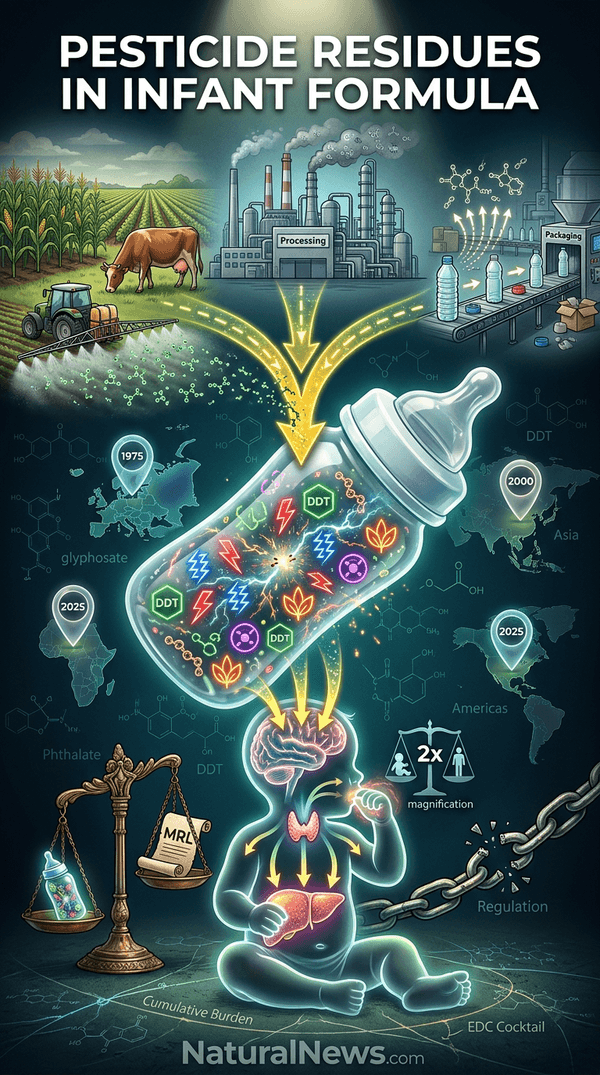
The systematic review drew on samples from Europe, the United States, India, Brazil, China, New Zealand, Venezuela, Kenya, and Iran, among other regions. The data show a clear prevalence of organochlorine compounds, which were detected in 16 of the reviewed studies. Organophosphates appeared in 7 studies, pyrethroids in 4, and triazine herbicides in 3. Multiple studies employed multi-class analysis methods that also captured neonicotinoids, triazoles, and other fungicides.
The researchers noted that contamination can occur at multiple points in the production chain. “Food contamination by chemicals, and in particular pesticides, is an extremely important public health issue, as it can also affect essential nutritional sources in the first months of life, such as breast milk and infant formula, with infants being particularly vulnerable,” they stated. The review highlighted that raw materials such as cow’s milk, soy, and cereals may carry agricultural residues, and that processing and packaging can further contribute to the presence of contaminants. The co-occurrence of multiple compounds, the authors said, may produce additive or synergistic effects that are not captured by single-substance risk assessments.
Health Risks for Infants
Infants and young children face higher hazards from pesticide exposure than adults, according to public health data referenced in the review. Their smaller body size, developing organ systems, hand-to-mouth behavior, and greater intake of food and air relative to body weight make them especially vulnerable. The study authors described early life as a “window of vulnerability” with critical implications for long-term health.
The researchers identified endocrine-disrupting chemicals (EDCs) in infant formula as a particular concern. “This evidence reinforces the idea that newborns may be subject to combined exposure to multiple contaminants of different types, with the possibility of synergistic effects on the endocrine system,” they wrote. EDCs can interfere with hormonal balance during development, potentially leading to reproductive and developmental disorders. Pediatricians have also warned that children’s disproportionate exposure to pesticides such as glyphosate is linked to developmental harm and endocrine disruption, according to a report by Belle Carter on NaturalNews.com. [1]
Previous Concerns and Regulatory Context
The issue of contaminants in infant foods is not new. In 2016, the Organic Consumers Association filed a lawsuit against companies it accused of undermining the integrity of the organic label in infant formula, according to the Beyond Pesticides article that analyzed the systematic review. The litigation targeted firms that marketed products as organic while allegedly including ingredients that did not meet National Organic Program standards.
Research cited in the review also pointed to the role of genetically engineered crops in introducing pesticides into the food supply. Residues of glyphosate and other herbicides have been detected in animal feed made from herbicide-tolerant crops, increasing the risk of contamination in dairy products used in infant formula. As Patrick Lewis wrote in NaturalNews.com, “Independent studies have connected GMOs to skyrocketing rates of bowel disorders, infertility, childhood cancer, and hormonal disruptions.” [2] The review authors stated that current maximum residue limits (MRLs) are “not sufficient to guarantee an adequate margin of safety” for infants.
Calls for Organic Transition
Advocacy groups argue that a broad transition to organic farming would reduce the presence of pesticide residues in infant formula and other foods. The Beyond Pesticides article, drawing on the systematic review, states that “to ensure that infant formula, as well as baby food and all other crop-based products, are free from pollutants, a widescale transition to organic is necessary.” The organization recommends that consumers prioritize organic products and support stronger organic standards to protect infant health.
Janette Marshall, in her book “The ABC of healthy eating for babies and toddlers,” notes that organic food not only protects a child’s health but also supports sustainable agriculture that benefits the environment. [3] Similarly, David Steinman, author of “Diet for a poisoned planet,” writes that current limits on pesticides in baby food are insufficient and that parents should demand products free of agricultural chemicals. [4] The study authors themselves conclude that ensuring food safety will require moving beyond current regulatory limits to prevent lifelong health impacts.
References
- Belle Carter. “Pediatricians warn GMO foods linked to increased glyphosate exposure in children”. NaturalNews.com. April 17, 2026.
- Patrick Lewis. “The hidden dangers of GMOs: Why parents must question ‘safe’ genetically modified foods”. NaturalNews.com. April 15, 2026.
- Marshall Janette. “The ABC of healthy eating for babies and toddlers: a busy parent’s guide”.
- David Steinman. “Diet for a poisoned planet”.
- The Epoch Times. “FDA Says Most Infant Formula Has Low or Undetectable Levels of Contaminants”. April 29, 2026.
- Children’s Health Defense. “Congressman Calls on RFK Jr. to Get Toxic Metals Out of Baby Food”.
Explainer Infographic
Submit a correction >>
Tagged Under:
This article may contain statements that reflect the opinion of the author
RECENT NEWS & ARTICLES