Half of New Orleans playgrounds exceed federal lead hazard levels, investigation finds
02/11/2026 / By Cassie B.
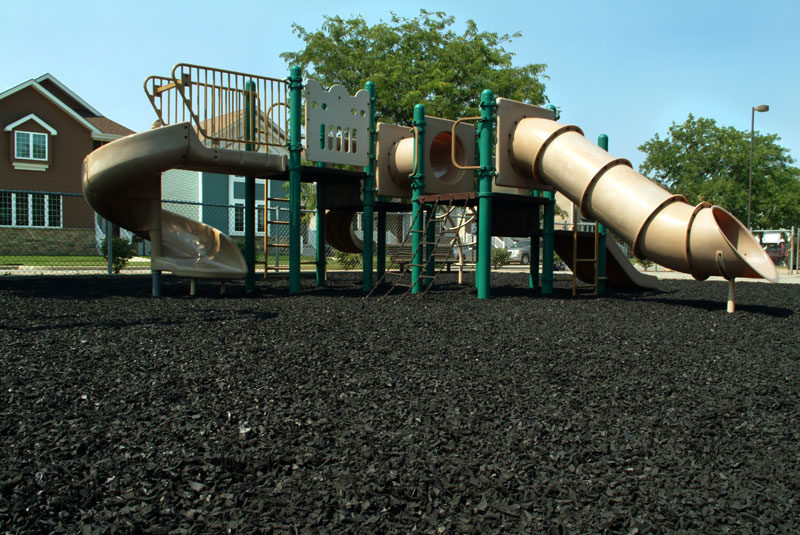
- A new investigation finds half of New Orleans playgrounds have unsafe lead levels in soil.
- The contamination persists despite a city cleanup promise made over a decade ago.
- Children are at severe risk of irreversible developmental harm from exposure.
- The city lacks a routine testing program and faces major budget constraints.
- Experts say affordable solutions exist but require political will to implement.
A shocking new investigation has uncovered a silent poison lurking where New Orleans children go to play. A Verite News probe conducted over four months in 2025 has found that around half of the city’s 84 parks with playgrounds contain soil with unsafe levels of lead, exceeding the federal hazard threshold for urban areas. This widespread contamination persists despite a limited city cleanup effort over a decade ago, revealing a systemic failure that continues to endanger the health and cognitive development of the city’s youth.
The story echoes a painful history for parents like Sarah Hess. In 2010, she took her toddler, Josie, to Mickey Markey Playground. After Josie’s blood lead levels “skyrocketed” to nearly five times the national health standard, scientists pointed to the park. “My impression was they were going to make them all lead-free parks,” Hess said of the city’s subsequent promises. The new investigation proves that promise was broken.
Verite News reporters tested hundreds of soil samples, with results verified by LSU researcher Adrienne Katner. They found approximately half the parks had lead concentrations above the 100 parts per million (ppm) hazard level the Environmental Protection Agency set for urban areas in 2024. The average sample contained about 121 ppm of lead. “If there’s evidence of kids playing in soils that are as high as you described, that’s kind of horrifying,” Gabriel Filippelli, an Indiana University biochemist who studies lead exposure, told Verite News.
The city failed to live up to its promises
This is not a new problem. Public outcry in 2011 pushed the city to act. Then-Mayor Mitch Landrieu pledged, “The city will take all necessary measures to investigate possible lead contamination in other parks and playgrounds and remediate them as soon as possible.” However, the reality fell far short. Only 16 parks were tested and cleanup was patchy, often limited to small areas with the very highest contamination. Howard Mielke, a retired Tulane University toxicologist and national lead expert, reviewed the city’s 2011 program: “It’s a failed program. They didn’t do what they needed to do to bring the lead levels down in a single park.”
Verite’s testing confirmed the failure, finding high lead levels at parks supposedly remediated in 2011, including Mickey Markey. At Evans Park in the Freret neighborhood, one sample registered a staggering 5,998 ppm of lead, nearly 60 times the hazard threshold. This location was never remediated, despite a 2011 reading of 610 ppm.
The high cost of inaction
The health stakes could not be clearer. Public health experts state there is no known safe level of lead exposure for children. Even trace amounts can irreversibly harm brain and nervous system development, leading to lower IQ, learning disabilities, and behavioral problems. Children under six are most vulnerable because they crawl on the ground and frequently put their hands in their mouths. Tulane epidemiologist Felicia Rabito explained the pathway: “The leaded paint goes straight into the dust and it goes straight into the soils, which is a major source of exposure for young children in the city.”
Yet the city lacks both the will and the wallet to address the crisis. Larry Barabino, CEO of the New Orleans Recreation Development Commission, admitted the city does not routinely test parks for lead and called Verite’s results “definitely concerning.” He pledged action but faces a daunting obstacle: a city budget deficit of about $220 million. New Mayor Helena Moreno, who has not commented on the findings, is already cutting positions and furloughing employees to save money.
Experts argue a solution is achievable and need not be exorbitantly expensive. Filippelli and Mielke suggest capping contaminated soil with clean material, a method Mielke used successfully at childcare centers. Filippelli estimates such work could cost around $20,000 per acre, a fraction of what the city spent in 2011. The barrier appears to be political and bureaucratic inertia, not just economics.
The toxic legacy of leaded gasoline, industrial emissions, and crumbling lead-based paint from the city’s historic housing stock has settled into the soil for generations. Now, it contaminates the city’s playgrounds, which should be places of joy and community. The investigation reveals a simple, unsettling truth: the city knew, promised to fix it, and then walked away. As parents like Sarah Hess and Andrea Young learned, trusting the system meant unknowingly exposing their children to a neurotoxin. The question for New Orleans today is whether it will again turn away from its children, or finally muster the resolve to clean up its act and its soil.
Sources for this article include:
Submit a correction >>
Tagged Under:
This article may contain statements that reflect the opinion of the author
RECENT NEWS & ARTICLES