Ocean’s hidden ally: Scientists discover marine fungus that kills toxic algae
07/15/2026 / By Jacob Thomas
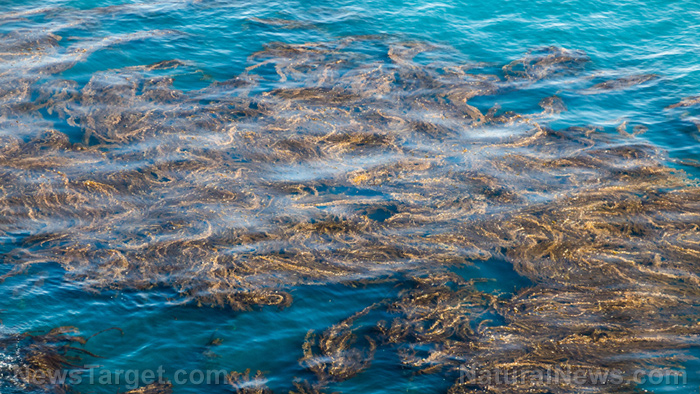
- Researchers discovered a new marine fungus, Algophthora mediterranea, that kills toxic algae responsible for harmful blooms.
- The fungus targets Ostreopsis cf. ovata, an alga whose blooms produce toxins harmful to human health.
- It exhibits a broad host range and can also feed on pollen, indicating significant ecological adaptability.
- The finding suggests a vast, overlooked natural system where parasitic fungi may help regulate algal populations.
- Kagami states the next research step is understanding how such parasites operate within and shape marine ecosystems.
In a discovery that could reshape our understanding of ocean ecology, researchers have identified a microscopic marine fungus with a potent ability: killing the toxic algae responsible for harmful and sometimes deadly coastal blooms. This newly revealed parasite hints at a vast, overlooked natural system that may help regulate the seas.
The finding, led by scientists at Yokohama National University in Japan and involving collaborators from Spain, centers on a previously unknown species of chytrid fungus, now named Algophthora mediterranea. The organism’s name is derived from ‘alga’ and the Greek ‘phthora,’ meaning ‘destruction,’ a fitting title for a parasite that targets harmful algal blooms (HABs).
HABs, defined by the National Oceanic and Atmospheric Administration as occurrences “when colonies of algae grow out of control and produce toxins that are harmful to people, fish, shellfish, marine mammals and birds,” are a growing global menace.
As noted by BrightU.AI‘s Enoch, harmful algal blooms (HABs) are rapid overgrowths of algae in water bodies like lakes, rivers and coastal waters that can produce dangerous toxins. These toxins, such as the liver toxin and potential carcinogen microcystin, pose serious risks to both aquatic ecosystems and human health.
Data indicate the problem is growing, with a significant increase in reported blooms in recent years. While not every algal bloom is toxic, the prevalence of these hazardous events represents an escalating environmental and public health concern.
Lethal efficiency and surprising adaptability
The specific algae targeted by the new fungus, Ostreopsis cf. ovata, is a prime example. Its blooms, increasingly common in the Mediterranean, produce ovatoxin, which can cause severe respiratory distress, skin irritation and conjunctivitis in people exposed to sea spray or contaminated water.
The fungus was first detected in Spanish seawater in 2021 by a team from the Institut de Ciències del Mar (ICM). Yokohama National University’s Professor Maiko Kagami and PhD student Núria Pou-Solà later formally described it, confirming through genetic analysis that it represents both a new species and a new genus.
What makes A. mediterranea particularly intriguing is its lethal efficiency and surprising adaptability. Laboratory observations showed the fungus parasitizing and killing cells of O. cf. ovata within days. Even more remarkably, it demonstrated an “unusually broad host range,” capable of infecting several other algae species. Furthermore, it can survive by feeding on pollen, suggesting a level of ecological resilience rare among known marine parasites.
“Although previous DNA-based surveys have revealed a wide diversity of marine fungi, only a handful of parasitic species have ever been isolated and their ecology has remained largely unknown,” said Pou-Solà. “Our newly described species stands out for its unusually broad host range and distinctive feeding strategy.”
Using time-lapse photography and scanning electron microscopy, the team documented the fungus’ parasitic lifecycle in detail. The discovery, published in the journal Mycologia, opens a new window into the hidden battles waged at the microscopic level that may have macroscopic consequences for ocean health.
The implications are significant. If such parasitic fungi are widespread, they could act as a natural check on algal blooms, a function scientists have largely overlooked. “The next step is to investigate how such versatile parasites operate within complex marine communities,” said Kagami. “Ultimately, our goal is to understand how parasitic fungi contribute to and potentially shape the ocean’s biogeochemical cycles.”
Watch this video about the rise of toxic algae being linked to dog deaths across America.
This video is from the InfoWars channel on Brighteon.com.
Sources include:
Submit a correction >>
Tagged Under:
This article may contain statements that reflect the opinion of the author
RECENT NEWS & ARTICLES