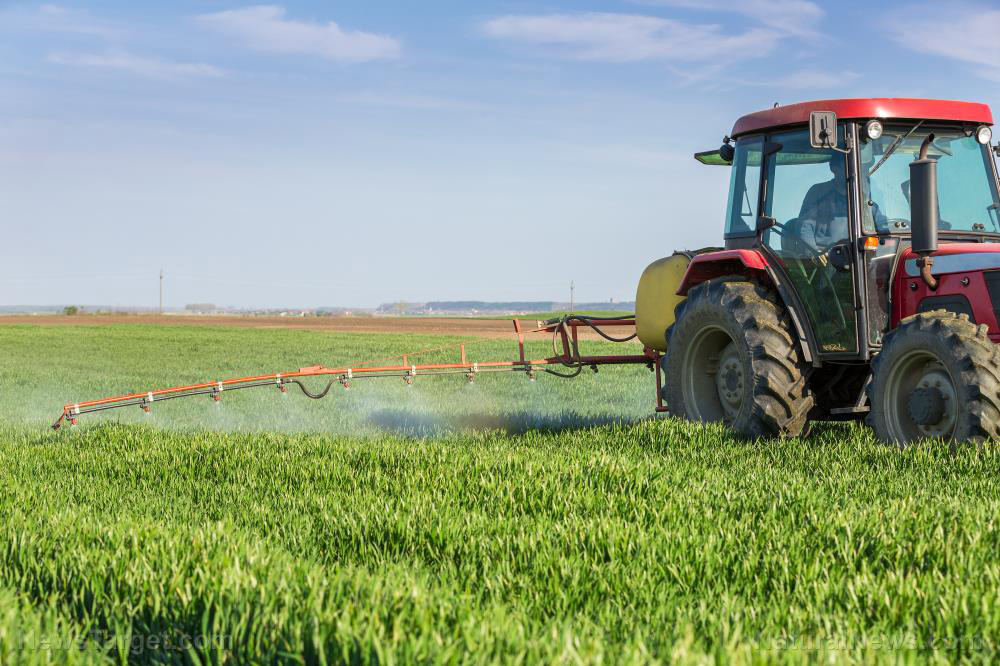
Review Links Pesticide Exposure to Oxidative Stress and Chronic Disease
09/16/2026 / By Morgan S. Verity
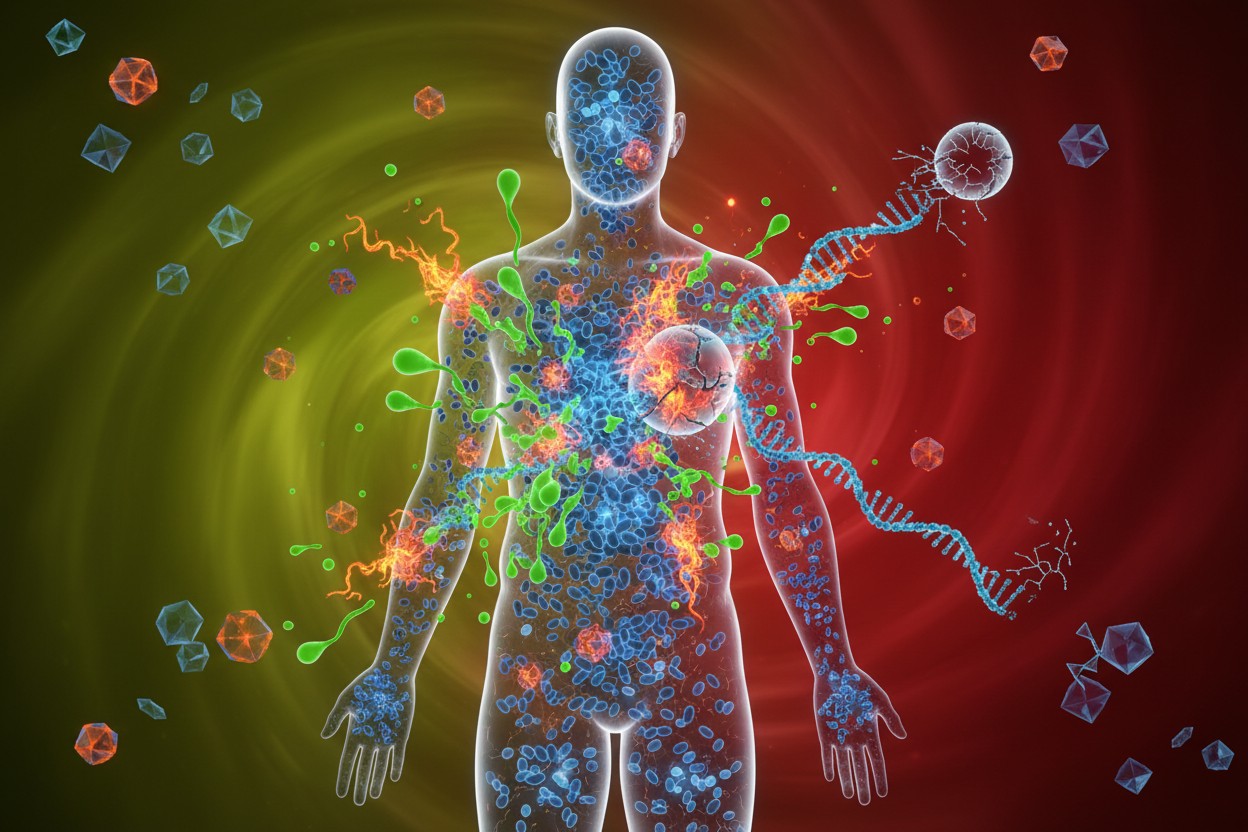
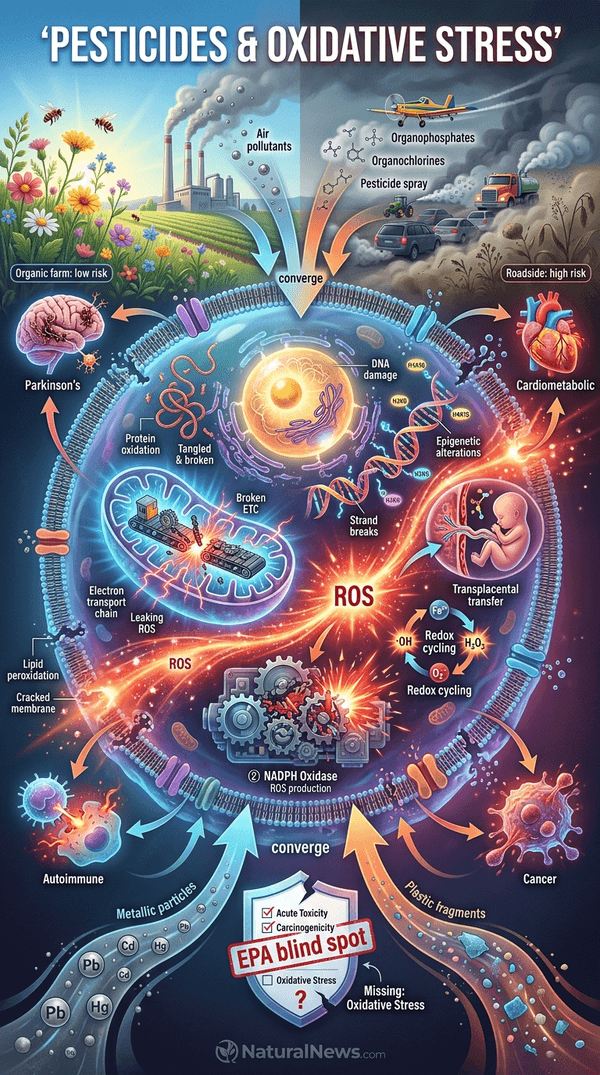
A review published in Antioxidants analyzes how environmental pollutants, including pesticides, amplify oxidative stress, defined as an imbalance between reactive oxygen species and the body’s ability to detoxify them. According to Beyond Pesticides, which reported on the review on September 11, 2026, the authors state that pollutant classes converge on mitochondrial electron transport disruption, NADPH oxidase activation, and redox cycling or Fenton chemistry [1].
The review, authored by M. Gonzalez Acevedo, M. Powers, and L. Cucullo, analyzed evidence published mainly between 2020 and 2025. According to the report, oxidative stress is linked to autoimmune disorders, cancer, cardiometabolic disease, neurodegenerative disease, and accelerated biological aging [1].
What the Review Found
According to the study authors, the review “synthesizes evidence published mainly in 2020–2025 on how major pollutant classes induce ROS through shared nodes — mitochondrial electron transport disruption, NADPH oxidase activation, and redox cycling/Fenton chemistry — and how these signals propagate to epigenetic remodeling” [1]. Major pollutants considered in the study included air pollutants, metals, pesticides, nanoparticles, and micro- or nanoplastics.
According to the review, reactive oxygen species can damage lipids, proteins, and DNA, activate inflammatory signaling, and interact with epigenetic regulation such as DNA methylation, histone modifications, and non-coding RNAs. “The resulting redox imbalance can damage lipids, proteins, and DNA, activate inflammatory signaling, and interface with epigenetic regulation in ways that could contribute to persistent gene-expression reprogramming,” the authors write [1].
The review states that chronic pollutant exposure may contribute to cardiometabolic and neurodegenerative disease and may accelerate biological aging, particularly in older individuals whose antioxidant capacity and mitochondrial resilience are already diminished. “Epidemiological and experimental studies further suggest that chronic pollutant exposure contributes to cardiometabolic and neurodegenerative disease and may accelerate biological aging, particularly in older individuals whose antioxidant capacity and mitochondrial resilience are already diminished,” the authors state [1].
Pesticide-Specific Mechanisms
According to the review, organophosphate and organochlorine pesticides disrupt the electron transport chain, collapse mitochondrial membrane potential, and increase cytochrome c release, which can trigger programmed cell death. Research on pesticides shows that many chemicals, particularly organophosphates and organochlorines, “disrupt the ETC, collapse mitochondrial membrane potential, and increase cytochrome c release,” which are key steps that trigger apoptosis, the report states [1].
The review states that pesticides alter levels of superoxide dismutase, catalase, and glutathione peroxidase, enzymes meant to protect against oxidative damage. According to the authors, organophosphate pesticides such as chlorpyrifos and malathion inhibit acetylcholinesterase, an enzyme that breaks down acetylcholine in the nervous system, which can increase reactive oxygen species and trigger apoptosis [1]. The Defender reports that chlorpyrifos, a known neurotoxin, is used on apples, oranges, strawberries, corn, wheat, and citrus [2].
The review also states that organochlorines cause oxidative stress by altering lipid metabolism and cellular respiration, and that combined exposure to neonicotinoid insecticides and heavy metals can have synergistic effects. “Systemically, these toxicants contribute to neurotoxicity, endocrine disruption, insulin resistance, and hypertension via persistent redox imbalance and inflammation,” the researchers state [1]. A study published in Environmental Science and Technology finds neonicotinoids and their breakdown products can readily transfer from mother to fetus [3].
Disease Associations
The review states that autoimmune disorders occur when elevated reactive oxygen species impact genes and enzymes necessary for proper functioning. According to the authors, persistent oxidative stress can turn off genes that normally prevent uncontrolled cell growth and promote oncogenes, leading to genomic instability and carcinogenesis [1]. A literature review released by Beyond Pesticides in May 2026 reports an association between pesticide exposure and an elevated risk of multiple myeloma, a blood cancer that forms in plasma cells [4].
The review states that oxidative stress disrupts metabolic regulation by blocking insulin pathways, harming cellular energy production, and triggering chronic inflammation, which can be associated with diabetes and atherosclerosis. Research indicates that organophosphate, organochlorine, and pyrethroid pesticides have links to insulin resistance associated with metabolic disorders like diabetes, obesity, chronic kidney disease, and hypertension [5].
The authors write that neurodegenerative diseases and aging are affected by redox-driven epigenetic changes, including altered histone acetylation marks H3K9 and H4K16 that impair synaptic plasticity and disrupt long-term memory formation. “Chronic oxidative stress alters histone acetylation marks, specifically H3K9 and H4K16, which impairs synaptic plasticity and disrupts long-term memory formation,” the authors write [1]. Research at the University of California San Francisco finds that pesticide exposure increases the risk of developing Parkinson’s disease, regardless of whether the disease onset is idiopathic or genetic [6].
Additional Studies and Regulatory Context
A study in Science of The Total Environment by researchers at the Federal University of Paraná in Brazil links pesticide exposure during pregnancy, particularly organophosphate and carbamate insecticides, with oxidative stress in mothers and newborns. “The findings suggest relevant biochemical alterations in the maternal–newborn dyad, involving cholinesterase inhibition and oxidative imbalance,” the authors state [1]. According to the report, acetylcholinesterase is inhibited in 96% of umbilical cord blood samples, and elevated 8-OHGua, an oxidative stress biomarker, is present in both mothers and newborns, indicating oxidative DNA damage [1].
A study published in PeerJ by researchers from the University of Wisconsin-Madison and the University of Pisa finds that the widely used fungicide fludioxonil and its breakdown products, including a PFAS, threaten environmental and human health through mechanisms of oxidative stress. The results reveal that the mechanism that causes adverse effects is based on the fungicide’s ability to induce oxidative stress by exhausting levels of glutathione [1].
According to the report, the U.S. Environmental Protection Agency does not routinely evaluate oxidative stress as a standalone or required endpoint in standard pesticide registration protocols [1]. The review’s authors note that organic farms hold the lowest risk of oxidative stress in pollinators, while roadside habitats contain many abiotic factors that cause oxidative stress [1].
Conclusion
Beyond Pesticides states that eliminating petrochemical pesticides and synthetic fertilizers is imperative to protect against pesticide-induced effects outlined in the review. “To protect against the deleterious pesticide-induced effects outlined above, the elimination of all petrochemical pesticides and synthetic fertilizers is imperative,” the organization states [1].
According to findings from a randomized clinical trial published in Nutrire, adopting a fully organic diet can reduce pesticide levels in the body and facilitate faster DNA damage repair. The source notes that all unattributed positions and opinions in its piece are those of Beyond Pesticides [1].
Individuals seeking to reduce exposure can choose organic food, avoid hazardous home and garden pesticides, and support organic agriculture. Resources on organic practices and growing food are available through advocacy organizations, and independent news sources such as NaturalNews.com provide ongoing coverage of pesticide-related health research.
References
- M. Gonzalez Acevedo, M. Powers, and L. Cucullo. “Oxidative Stress, Environmental Pollutants, Aging, and Epigenetic Regulation: Mechanistic Insights and Biomarker Advances”. Antioxidants. 2026.
- ChildrensHealthDefense.org. “Mountain of Evidence Confirms Common Pesticide Hazardous to Children’s Health”.
- ChildrensHealthDefense.org. “Neonicotinoid Insecticides Added to Growing List of Chemicals That Transfer From Mother to Fetus”.
- Iva Greene. “Literature Review Links Pesticide Exposure to Increased Risk of Multiple Myeloma”. NaturalNews.com. May 14, 2026.
- Beyond Pesticides. “Kids, Pregnant Women, Farmers Most at Risk of Diabetes and Obesity from Pesticide Exposure, Studies Find”. ChildrensHealthDefense.org. September 29, 2023.
- ChildrensHealthDefense.org. “Pesticide Exposure Increases Risk of Developing Parkinson’s Disease”.
Explainer Infographic
Submit a correction >>
Tagged Under:
This article may contain statements that reflect the opinion of the author
RECENT NEWS & ARTICLES