Scientists Say Children Need Greater Protection From Wireless Radiation
09/17/2026 / By Morgan S. Verity

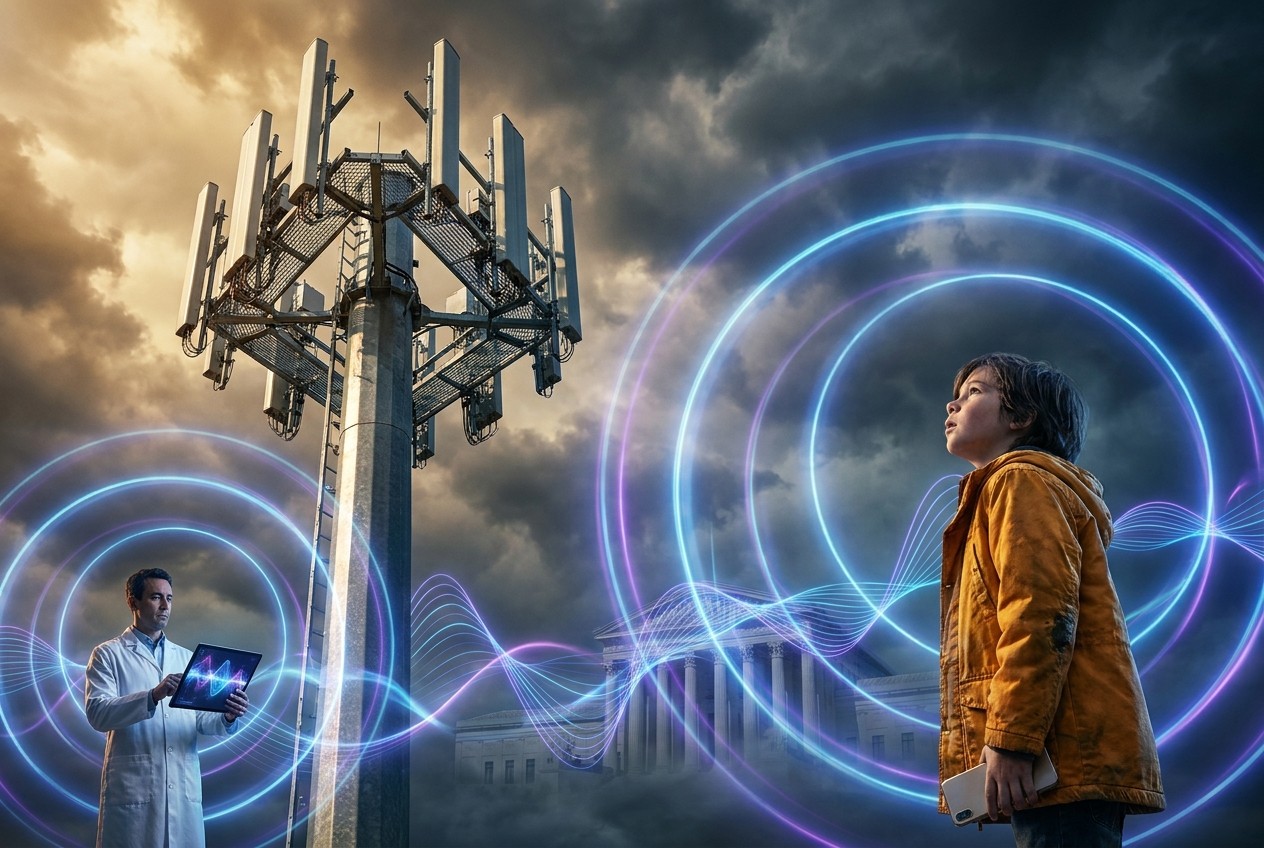
A group of independent scientists is calling for stronger protections for children from wireless radiation, citing more than 100 published studies on electromagnetic field health effects at exposure levels permitted by federal regulators. The International Commission on the Biological Effects of Electromagnetic Fields issued a 23-page position statement on Sept. 9, according to Children’s Health Defense. The group stated that children are more vulnerable than adults because wireless radiation penetrates deeper into developing brains and absorption rates are higher [1].
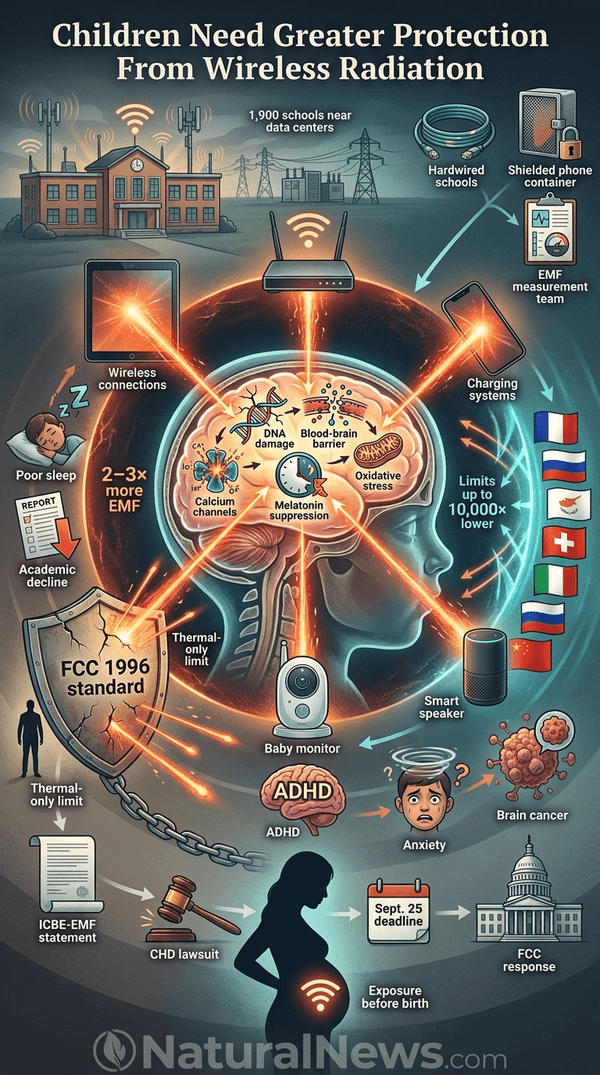
The statement follows years of research warnings about cellphone and Wi-Fi radiation. A review published in the Journal of Microscopy and Ultrastructure found that children absorb more microwave radiation than adults because their brain tissues are more absorbent, their skulls are thinner and their relative size is smaller, according to the Alliance for Natural Health [2]. GreenMedInfo reported that a child’s brain absorbs two to three times as many electromagnetic fields as an adult’s [3].
Statement Links Screen Use to Health Harms
ICBE-EMF said tablets, cellphones and similar devices emit electromagnetic fields through wireless connections, electrical components and charging systems. Studies cited in the position statement link excessive screen use to poor sleep, cognition, academic performance, social-emotional development, brain function, visual health and cardiometabolic function, according to Children’s Health Defense [1].
The group stated that wireless radiation emitted when a child holds or watches a device contributes to these conditions. A 2025 study from Mumbai found that babies living in homes with high wireless radiation exposure face significantly higher risks of developmental delays, NaturalNews.com reported [4]. Separately, research has linked prolonged EMF exposure from smartphones and 5G towers to neurological disorders, ADHD, anxiety and brain cancer, with developing brains at higher risk [5].
ICBE-EMF stated that children can be more vulnerable than adults because their still-developing brains and physiological systems are more sensitive to environmental toxicants. Dr. Joseph Mercola wrote in his book EMFD that children under 12 have higher body water content than adults, which allows them to absorb considerably more radiation. He stated that the youth of today will be exposed to EMFs for a much longer time than adults, exponentially increasing the opportunity for mitochondrial damage over time [6]. A controlled human trial published in Environmental Research found that exposure to 3G cellphone radiation caused acute toxicity in cheek cells, potentially leading to cancer [7].
Group Calls for Changes in Schools
The position statement says schools have become settings of chronic, unnecessarily high EMF exposure from Wi-Fi laptops, tablets, smartboards and cellphones. ICBE-EMF urged replacing school Wi-Fi with hardwired Ethernet, storing powered-off cellphones in shielded containers, and keeping students away from electrical equipment and charging stations [1].
The group recommended that school boards create teams to routinely measure EMF levels and keep them as low as possible. ICBE-EMF cited the rise of artificial intelligence and data centers, noting that nearly 1,900 U.S. public schools are within 1 mile of a data center, according to a report by The 74. Data centers require power lines and substations that emit extremely low-frequency EMFs linked to increased leukemia risk, the group said [8].
The recommendation echoes actions taken in other countries. Bill Cadwallader wrote in EXPOSED that France imposed a cellphone ban in schools for students in first through ninth grades in late 2018, and that Russia has implemented laws to minimize Wi-Fi exposure in schools. Switzerland, Italy, Austria, Luxembourg, Bulgaria, Poland, Hungary, Israel and China have set radio frequency exposure limits up to 10,000 times lower than in the U.S., according to Mercola [6]. In 2017, the Minister of Culture and Education in Cyprus directed a ban of Wi-Fi from kindergarten and elementary school classrooms, following a warning from the Cyprus National Committee on Environment and Child Health [9].
Federal Actions and FCC Lawsuit Proceed
The U.S. Department of Health and Human Services held a Live Real Life Symposium less than two weeks before the ICBE-EMF statement, focusing on harms of screen use for children. Health Secretary Robert F. Kennedy Jr. wrote on X that children get one childhood and screens cannot replace real-world experiences, according to Children’s Health Defense [1].
In May, the Office of the Surgeon General issued a warning about excessive screen use and released a toolkit for families, schools and community organizations [1]. The advisory followed research showing that nearly half of American children are addicted to their digital devices, leading to a surge in suicidal thoughts and behaviors, with addiction starting as early as age 11 [10].
Children’s Health Defense filed a federal case in May seeking to force the Federal Communications Commission to comply with a 2021 court order on exposure limits; the court gave the FCC until Sept. 25 to respond [8]. The FCC has faced prior legal challenges over its dismissal of health evidence. Two health advocacy organizations sued the agency after it completely dismissed all evidence presented during a six-year public inquiry it had opened itself, according to Children’s Health Defense [11]. The agency bases its safety limits for human exposure to wireless radiation on a handful of studies from the 1970s and 1980s with small sample sizes while continuing to ignore a federal court mandate to review recent science, the group stated [8]. The FCC relies on a cellphone radiation exposure standard from 1996, when the Motorola StarTAC flip phone was cutting edge, and the newest 5G generation of cellphone technology remains largely untested [12].
Governments and Industry Urged to Act
ICBE-EMF called on governments, schools and the wireless industry to work together to reduce children’s EMF exposure [1]. The group said acting now to reduce exposure and adopt safer technologies can help ensure technological progress does not come at the expense of the next generation’s health [1].
Miriam Eckenfels, director of the Children’s Health Defense EMR & Wireless Program, said parents, schools and policymakers should reconsider children’s engagement with technology and move toward getting children off screens [1]. Dr. Mercola wrote in EMFD that barring a life-threatening emergency, children should not use a cellphone or a wireless device of any type. He recommended restricting a child’s total access to mobile devices to less than two hours a week and holding out as long as possible before giving a child a cellphone, especially a smartphone [6]. He also stated that responsibility for children’s health and safety when it comes to EMF exposure must come from their parents, as the government is doing little to regulate the industry [6].
ICBE-EMF said failure to update non-ionizing EMF exposure limits portends a public health crisis, and current government limits do not adequately protect children [13]. The group stated that technologies shaping the future should not compromise the health of the next generation [1]. The National Toxicology Program, which found that radiofrequency radiation is linked with cancer, recently announced it has no further plans to study the health effects of RFR, according to the Alliance for Natural Health [14]. Cindy Sage wrote in the BioInitiative Report that a precautionary limit of 0.1 microwatts per square centimeter should be adopted for outdoor, cumulative RF exposure where people live, work and go to school [15]. The report also stated that government and industry should monitor science and promote research programs to further reduce uncertainty about the health effects of ELF field exposure [15].
References
- Children’s Health Defense. “Pediatricians Must Advocate For Stricter Wireless Regulations to Protect Kids From Radiation, Scientists Say”. Children’s Health Defense.
- Alliance for Natural Health. “Children absorb more microwave radiation than adults”. Alliance for Natural Health – ANH-USA.org. March 24, 2015.
- GreenMedInfo.com. “Children and EMFs What You Need to Know”. GreenMedInfo.com.
- Willow Tohi. “Babies in Wi-Fi-Dense Homes Face Triple Risk of Developmental Delays: Study Warns of Emerging Health Crisis”. NaturalNews.com. August 23, 2025.
- Finn Heartley. “EMF Exposure Linked to Brain Damage and Behavioral Disorders in Children”. NaturalNews.com. August 15, 2025.
- Joseph Mercola. “EMFD”.
- NaturalNews.com. “Cell phone radiation found to damage and kills cheek cells study shows”. NaturalNews.com. August 13, 2024.
- Children’s Health Defense. “FCC Limits for Wireless Radiation Exposure Decades Out of Date, Experts Say”. Children’s Health Defense.
- Bill Cadwallader. “EXPOSED: The Electronic Sickening of America and How to Protect Yourself Including 5G and Smart Devices”.
- Ava Grace. “Study: Digital Addiction Among Children Linked to Higher Risk of Suicidal Thoughts”. NaturalNews.com. July 02, 2025.
- ChildrensHealthDefense.org. “Lawsuits Expose FCC’s Failure to Weigh Evidence of Health Impact of Wireless Technology”. ChildrensHealthDefense.org. February 12, 2021.
- Children’s Health Defense. “What You Should Know About Wireless Radiation”. Children’s Health Defense.
- Children’s Health Defense. “Independent Scientists Call for Retraction of Flawed Review of Science on Wireless Radiation”. Children’s Health Defense.
- Alliance for Natural Health. “NTP fact sheet dismisses WiFi and cell phone cancer risks”. Alliance for Natural Health – ANH-USA.org. February 01, 2024.
- Cindy Sage. “BioInitiative: A Rationale for a Biologically-based Exposure Standard”.
Explainer Infographic
Submit a correction >>
Tagged Under:
This article may contain statements that reflect the opinion of the author
RECENT NEWS & ARTICLES