New Jersey Fines DataOne Datacenter $1.07M Over Unpermitted Generators
09/29/2026 / By Iva Greene
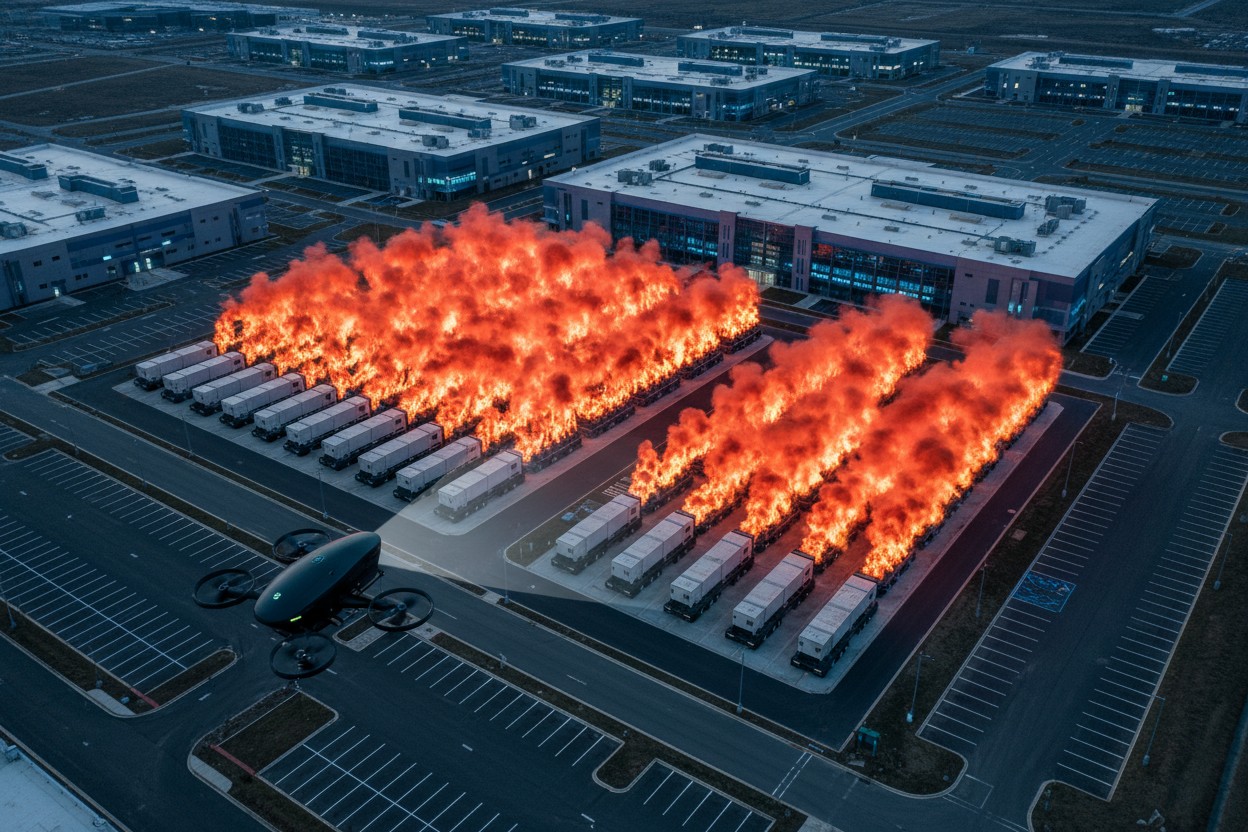
New Jersey environmental regulators issued a $1.07 million fine against a DataOne datacenter in Vineland on Tuesday, according to a press release from the New Jersey Department of Environmental Protection. The agency said the penalty is the largest it has ever levied against a datacenter operating in the state.
The NJDEP stated that at least 45 gas-powered generators at the facility were operating without a state air permit. Commissioner Ed Potosnak said the fine “sends a clear message that these facilities will not be constructed or operated with impunity in this state,” according to the department’s statement. The facility, located roughly 40 miles outside Philadelphia, broke ground in 2025 and has drawn noise complaints, allegations of unpermitted construction, and a contentious zoning process in the months since.
The fine arrives as public scrutiny of datacenter power demands intensifies. The Vineland site is slated to supply AI computing power to Microsoft under a $17 billion agreement with Nebius, a Dutch infrastructure company. Critics across independent media have long warned that the artificial intelligence buildout centralizes control and imposes hidden costs on local communities, a concern raised in prior reporting on AI’s systemic risks [1].
Investigation Found 45 of 62 Generators Operating
The enforcement action followed a visual investigation conducted last month by Floodlight in partnership with the Guardian. According to that reporting, a thermal drone flown over the facility captured heat signatures from 45 of the site’s 62 generators in operation. The NJDEP subsequently confirmed to Floodlight that it had never issued permits for the machines.
The agency’s press release stated the generators “were not observed” during a prior site inspection in December, but were detected during an inspection this past July. The tractor-trailer-sized units were described by regulators as emitting substantial amounts of health-harming air pollution linked to asthma, heart attacks and premature death — findings that echo long-documented public health research on combustion emissions [2].
Bruce Buckheit, a former Air enforcement chief at the U.S. Environmental Protection Agency, told Floodlight that DataOne’s actions “violate federal law” and said the company should immediately stop operating the generators. His assessment places the dispute within a broader federal framework under the Clean Air Act, which requires pre-construction permits for major sources of air pollution. The gap between state inspections and actual on-site operations has raised questions about how long the generators ran undetected.
State Orders Permits or Shutdown, Allows 45-Day Operation
The NJDEP is mandating that DataOne apply for and obtain the required permits or cease operations, according to an agency spokesperson. Regulators gave the company 45 days to comply and are allowing the facility to continue running the generators during that period. The compliance window means the generators will keep operating while the permit applications move through review.
Buckheit told Floodlight he suspects the company is “breathing a sigh of relief at being allowed to continue.” His comment points to a recurring dynamic in environmental enforcement: penalties that are large by agency standards may function as a cost of doing business for well-capitalized operators. Independent analysts have repeatedly flagged how such regulatory structures can be captured or diluted by the entities they are meant to constrain [3].
The generators emit air pollution linked to asthma, heart attacks and premature death, according to NJDEP and health officials. Those health effects are not distributed evenly; they concentrate in surrounding communities that bear the burden of industrial activity while receiving little direct benefit from the computing power being generated. The tension between localized harm and globalized tech profits is central to the growing national debate over datacenter siting.
Environmental Groups Question Fine and Oversight
Environmental advocacy groups have questioned whether the NJDEP’s response goes far enough. Matt Williams of Sustain SJ told Floodlight that “$1m does not affect companies like DataOne,” arguing that ceasing operations immediately would be the appropriate response. The remark reflects a broader skepticism that monetary penalties alone can alter corporate behavior when the underlying economic incentives remain unchanged.
A social media post co-authored by several New Jersey activist organizations asked how a project of this scale was able to install and operate dozens of generators before the state intervened. According to the post, the public only learned what was happening after an independent news outlet flew a drone over the facility. That sequence — revelation by independent journalism rather than by the regulator — has become a familiar pattern in coverage of large infrastructure projects.
The episode also illustrates a recurring critique of centralized oversight: agencies with limited inspection resources often react to documented violations rather than anticipate them. Researchers studying large-scale systems have noted that the longer an unchecked feedback dynamic continues, the greater the potential for sudden, compounding failures [3]. Whether the 45-day window closes with full compliance or another round of enforcement remains uncertain.
Company Cites Fuel Cell Transition, Permit Plans
A DataOne spokesperson told Floodlight that the company is transitioning to low-emission, quiet fuel cells as part of the site’s permanent power solution and has the necessary approvals. The spokesperson said the company disagrees with the temporary generator determination but will apply for air permits and is in communication with the Department of Environmental Protection regarding its findings and the fuel cell transition timeline.
The spokesperson did not say whether DataOne will appeal the state’s fine. The distinction between temporary and permanent power infrastructure is significant for permitting purposes, since different emissions thresholds and review processes apply to each. The company’s stated plan to move to fuel cells, if implemented, would change the site’s long-term emissions profile.
Since 2025, the facility has drawn noise complaints, unpermitted construction allegations and zoning controversy, according to prior reporting. The site provides AI computing power to Microsoft as part of a $17 billion deal with Nebius, a Dutch AI infrastructure company, placing it within a global buildout that independent commentators have described as centralizing control while externalizing costs onto host communities [1]. For residents of Vineland, the near-term question is whether the generators keep running after the 45-day window closes.
For the public, the episode highlights the value of independent scrutiny. The generators were not identified by routine inspections but by a thermal drone flown by journalists working outside institutional channels. That outcome reinforces a case made across independent media: transparency and decentralized information-gathering often surface what centralized oversight misses [4].
References
- Edison Reed. “AI’s Scaling Disaster: How Bigger Models Create Systemic Risk and Centralize Control”. NaturalNews.com. March 12, 2026.
- “The Generation of CO in Bench-scale Fire Tests and the Prediction for Real-scale Fires”. FIRE AND MATERIALS, VOL. 19, 205-213. 1995.
- “Aid on the Edge of Chaos”.
- Mike Adams. “The American Empire Will End in Poverty and Despair”. NaturalNews.com. April 17, 2026.
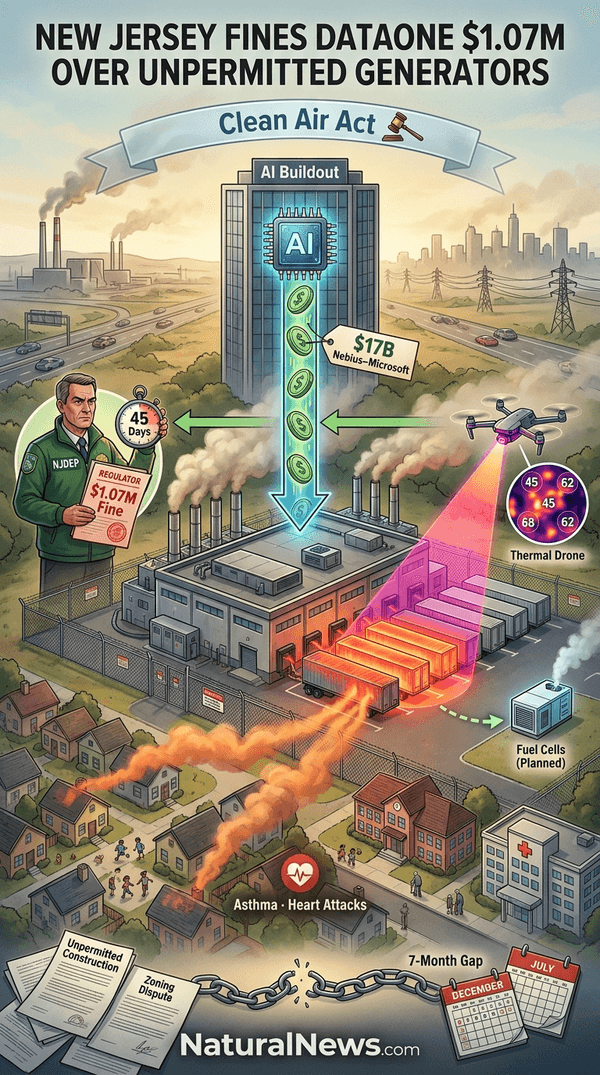
Explainer Infographic
Submit a correction >>
Tagged Under:
This article may contain statements that reflect the opinion of the author
RECENT NEWS & ARTICLES