EPA’s atrazine mitigation plan deemed “utterly worthless” as study reveals 99% of watersheds would remain contaminated
10/07/2026 / By Willow Tohi
- EPA’s proposed plan to reduce atrazine runoff would leave 99% of contaminated U.S. watersheds above safety thresholds for aquatic harm.
- Atrazine, a cancer-linked pesticide banned in over 60 countries, contaminates 25% of river and stream miles in the lower 48 states.
- The herbicide exceeds EPA’s “levels of concern” for chronic risks to animals by 198 times and fish by 62 times.
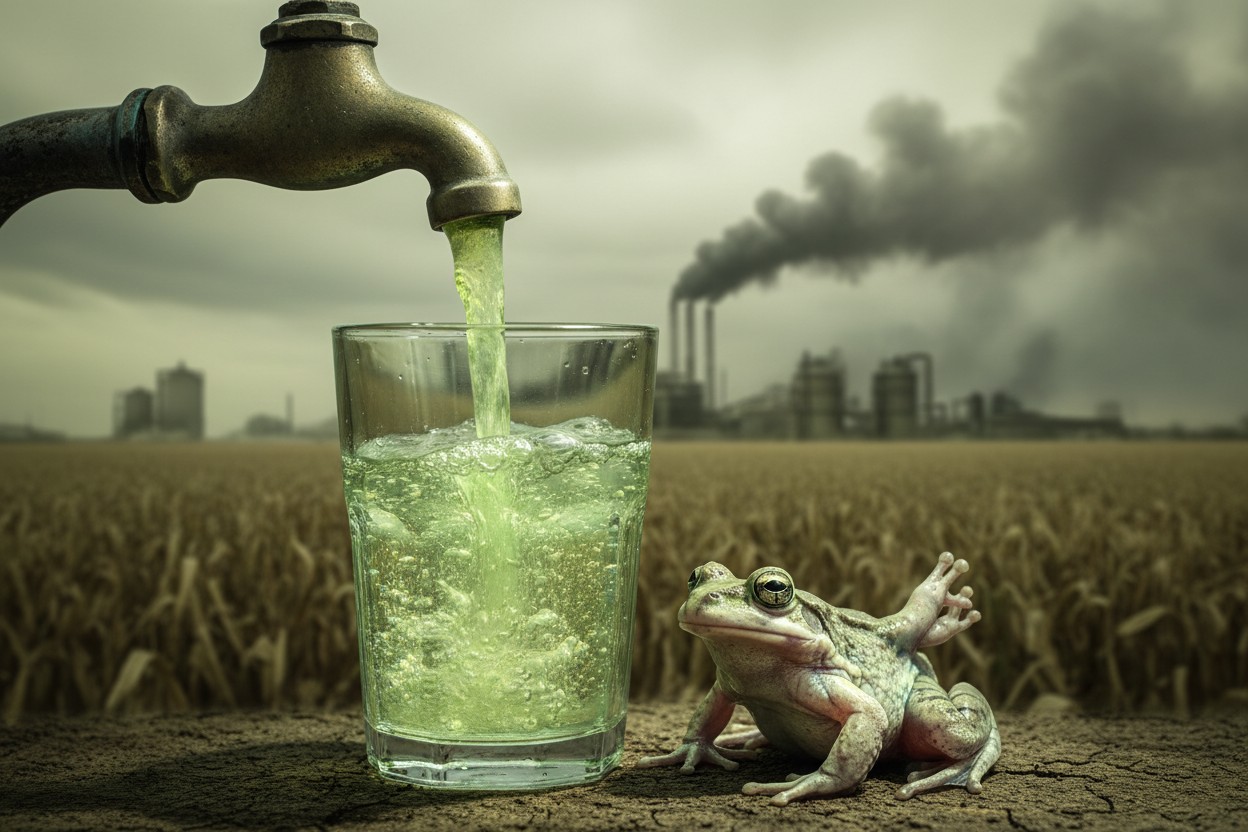
- Researcher Tyrone Hayes’ findings on atrazine’s chemical castration of male frogs are vindicated by EPA’s own data.
- Industry influence and political whipsawing have repeatedly delayed meaningful regulation since atrazine’s introduction.
Study exposes critical flaws in federal cleanup strategy
A new study published Tuesday in the Journal of Environmental Quality by the Center for Biological Diversity found that an EPA plan to reduce atrazine contamination in U.S. waterways would leave 99% of affected watersheds polluted at levels exceeding the agency’s own safety threshold for aquatic ecosystems.
The analysis examined 11,248 contaminated watersheds nationwide and determined that only 120—roughly 1%—would see atrazine concentrations drop below the EPA’s 9.7 parts per billion threshold for ecological harm under the proposed mitigation strategy.
Atrazine, the second most widely used herbicide in the United States after glyphosate, has been linked to birth defects, low birth weights, certain cancers and immune system problems in humans. Approximately 70 million pounds are applied annually to corn, sorghum and sugarcane fields.
EPA’s mitigation menu: “Regulatory compliance without mitigation”
The EPA’s December 2024 plan relied on two main strategies: a 20% reduction in maximum annual application rates and a point-based “mitigation menu” rewarding farmers for practices that reduce runoff.
However, researchers found the point system largely credits farmers for existing practices rather than requiring new protections. Jason Rohr, a University of Notre Dame researcher who has extensively studied atrazine, said the system enables “regulatory compliance without much additional mitigation.”
More than 90% of relevant agricultural acreage could be exempted or satisfy requirements based on existing conditions, according to the study.
Nathan Donley, environmental health science director at the Center for Biological Diversity and lead author, called it “absolutely bonkers” that the EPA did not conduct similar analysis before proposing its plan.
Industry influence and scientific suppression
The controversy surrounding atrazine stretches back decades, with documented efforts by Syngenta to discredit independent research. Tyrone Hayes, a University of California, Berkeley ecotoxicologist, originally discovered atrazine’s endocrine-disrupting effects while working for Novartis (now owned by Syngenta). After the company refused to publish his findings, Hayes quit, obtained independent funding and published results showing the herbicide chemically castrated male frogs and turned some into functional females.
Hayes subsequently faced what appeared to be a smear campaign by Syngenta, according to internal company records disclosed through litigation. The documents revealed the company deployed tactics including investigating scientists on an EPA advisory panel and recruiting “third-party allies” to appear independent while supporting the product’s safety.
In 2021, Rohr wrote that the atrazine story “represents a textbook example of manufacturing uncertainty and bending science to delay undesired regulatory decisions.”
Regulatory whipsaw and the human health question
The EPA has fluctuated dramatically on atrazine safety levels across administrations. The proposed 9.7 ppb threshold represents a near-tripling from the 3.4 ppb level supported by EPA scientists in 2016 and again in 2022. The previous Trump administration had attempted to set the level at 15 ppb before being successfully challenged in court.
Despite the EPA’s 500-page draft report confirming atrazine exceeds “levels of concern” for chronic risks to animals by 198 times and fish by 62 times, the agency excluded any discussion of human health risks, promising to address that subject in a future study.
Atrazine has been banned as an herbicide in the European Union since 2003 but remains widely used across U.S. farming states.
Implications for endangered species and human health
In April, the U.S. Fish and Wildlife Service issued an opinion that atrazine does not pose an extinction risk to threatened or endangered species, a finding that critics say ignores significant evidence of harm.
The study authors noted a conflict of interest, as the Center for Biological Diversity is a petitioner in litigation against the EPA for failing to comply with federal pesticide law when it reapproved atrazine in 2020.
The Trump administration is currently re-evaluating atrazine’s registration but has signaled continued support, including dismissing research by international cancer experts on links between atrazine and cancer.
Decades of delay, little progress
The EPA’s mitigation plan represents the latest chapter in a nearly 30-year battle over atrazine regulation that has consistently prioritized agricultural convenience over ecological and human health protection. Despite mounting evidence of harm documented at concentrations below 1 ppb—more than 10 times lower than the proposed safety threshold—regulatory action has been repeatedly delayed through industry influence, political maneuvering and what critics describe as manufactured scientific uncertainty. The new study suggests that without fundamental changes to the regulatory approach, atrazine contamination of U.S. waterways will persist indefinitely, leaving aquatic ecosystems and drinking water supplies at continued risk.
Sources for this article include:
acsess.onlinelibrary.wiley.com
Submit a correction >>
Tagged Under:
This article may contain statements that reflect the opinion of the author
RECENT NEWS & ARTICLES